
The trick to getting smarter is to invest in yourself. The good news is you don’t need to put in a lot to see some serious wins.
It all comes down to developing the right daily habits that, even with a small amount of time, can compound your learning every day.
I’m a dedicated lifelong learner. What I’ve realized is that sharpening my brain and becoming more intelligent has everything to do with my mindset and my daily routines. I’ve put in place habits everyday to maximize my gains in small amounts of time and I make those habits as easy as possible to do.
Here’s what you can do to get started today because that’s how simple these habits are!
Daily Reading and Learning

It’s no surprise that reading and learning new information are amazing for your brain. What you may not realize is how valuable short, consistent chunks of learning time each day can be. You just have to plan for it and make it part of your routine.
1. Plan to Read for 15-20 Minutes Every Day
Reading is such a quick win and, if we’re totally honest with ourselves, fits into even the busiest schedules!
Reading something…anything…makes a huge difference in how you think and strengthens your ability to focus. (No small feat in today’s world of social media and AI!)
But, it’s usually not the actual reading time that’s a challenge. It’s that we haven’t PLANNED to read. So when unexpected free moments come up, we either waste time searching for something to read, or default to something easy…like scrolling mindlessly on our phones.
The best possible scenario is to plan to read a few different things during the week to keep your brain on its toes, so to speak.
Fiction helps you think more creatively and connects you emotionally to the characters and their struggles. Non-fiction or news articles help you learn new things and stay current with what’s happening in the world.
But, we don’t always live in this ideal scenario and simply reading the same types of things is still amazing.
Personally, I try to read a few different things every week so that my brain sees new ideas, different opinions, and writing styles. But sometimes, I just want to keep reading a great book I’m loving!
The key is I ALWAYS have a book I’m reading on my nightstand because I like to read to wind down at night.
But this simple habit also makes it easy to read because I don’t have to think about what to read or waste time trying to find something to read. It’s already there.
I also read articles on my phone. When I see something interesting, I keep the browser tab open or bookmark it to easily come back to it later when I have a few minutes.
And if I’m traveling, commuting by public transportation, or just going somewhere I know I might have to sit and wait like in a doctor’s waiting room, I always have something ready to read in my bag, on my Kindle, or on my phone.
2. Take One Note From What You Read.
The goal of this is to simply put one thing in your own words because it makes your brain have to think about, use, and remember something you just read.
This could be an interesting fact, a word you never saw, an idea you never thought about for a subject you know well, or a controversial opinion about something that got you fired up!
Once you’ve got it, you can go old-school and write it in a notebook. But it can be even simpler.
Underline a section in the actual book you’re reading….or just fold the page back so you can remember a specific part. Use a note-taking app on your phone like Notion or the notepad to quickly write something down. Email yourself a thought. Or you can even record a voice memo for yourself while you’re on the go.
Brain & Mental Challenges
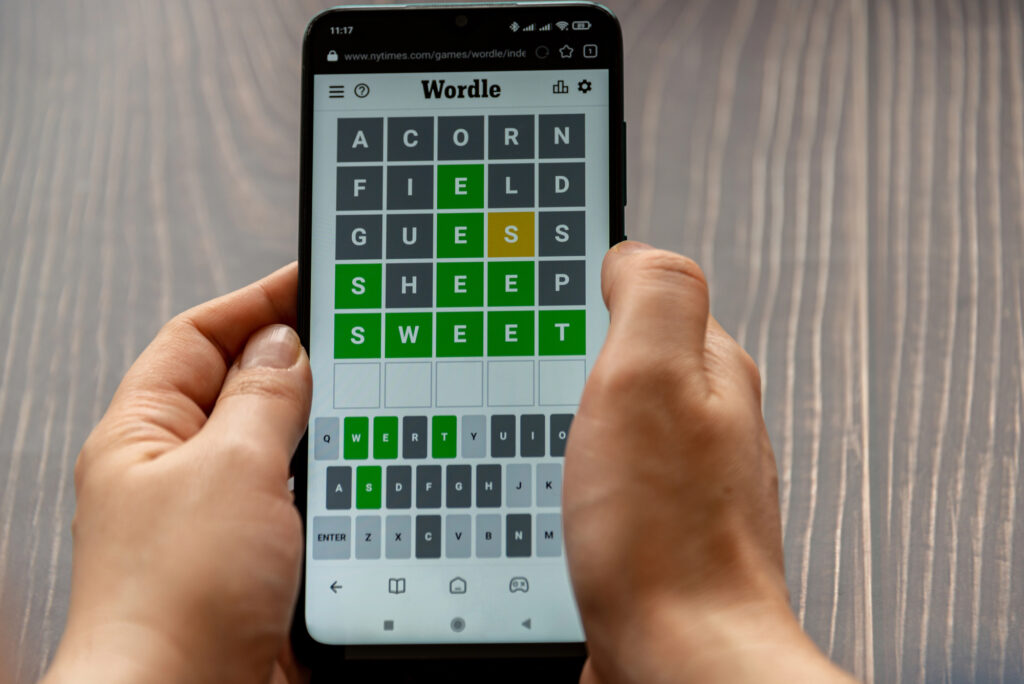
Puzzles and mental exercises do for the brain what planks and bicycle crunches do for the core. But instead of building muscle, you boost your problem-solving skills and build new pathways in the brain.
3. Solve a Puzzle or Brain Game Every Day.
Part of my daily morning routine is to solve the Wordle and a mini-crossword puzzle. The whole exercise takes no more than 5 minutes and I can do them while I’m waiting for the water for my tea to boil.
It’s a mental workout and I can almost feel my brain waking up and getting stronger with each of these problem-solving games.
I prefer word games but choose what you like the most whether it’s Sudoku, a brain teaser, or a logic or strategy game.
Then, do 1-2 of these puzzles every day as part of a routine to keep your mind sharp.
4. Memorize a Word, Fact, or Piece of Trivia.
It’s not rocket science to imagine how and why this practice helps your memory and build new brain pathways.
New knowledge, whether it’s a word and its meaning, a random piece of trivia, or a fact about history, science, or another topic, is…well, new knowledge!
For me, the key is simplifying how I come across this new information. Unless I’m actively researching something, I’d rather this knowledge just come to me.
I subscribe to a few daily emails that share a word of the day or a fact of the day. At some point, I take a quick look at that email. Later on, I try to quiz myself to see if I can remember it. It helps make it stick in my brain instead of just being a fly-by fact or tidbit.
5. Try a New Skill or Task for 10-15 Minutes
I try to practice something new every day to keep my brain flexible. You’ve probably figured out that I love to learn so it’s always a daily goal of mine.
But you might be thinking that this is totally impossible because there are only so many minutes in the day. That’s why it’s best to focus on small learning bites with the main goal being the attempt.
Let’s face it. None of us is going to become the next Mozart by spending 10 minutes a day plunking on the piano keys! So don’t get hung up on perfection.
My go-tos usually involve practicing a new language usually with an app on my phone, doing something musical, or even cooking a new recipe for dinner.
On super busy days, I’ll try to brush my teeth or eat with my left hand instead of my right. Or I’ll incorporate a new exercise in my workout to make my brain have to think about how I’m moving and coordinating my body.
You could also try things like sketching, painting, learning a new language, writing, learning strategic board games, origami, playing a musical instrument, gardening, jigsaw puzzles, or any other number of hobbies!
Just keep it fun and interesting!
ProTip: Don’t get caught in the trap of “I can’t start until I have the right materials.” Start a new hobby with what you already have and keep those materials in an easy-to-grab place so you can try or practice when you have the time.
Reflect on & Apply What You’re Learning

Trivia and words of the day are fun and easy to add to your daily habits routine but what’s the point if you forget almost everything? Writing down things you learned or explaining them to someone else helps move that new information from your short-term to your long-term memory.
6. Start a 5 Minute Journaling Habit.
This doesn’t have to be long diary entries with every thought and feeling swirling around inside poured onto page after page. (But it could be if you want!)
Journaling is a fantastic skill to develop but this daily habit can be simple. Depending on your schedule, I would try it first thing in the morning, midday, or before bed.
The goal is to write down a couple of sentences about something that you recently learned or figured out and/or something that is a challenge or struggle right now.
My journal entries could include facts or interesting information I’ve learned, but they could also look like this.
“Found out the guy selling fruit and vegetables down the street isn’t cash only! So good to know because now I stop there and save time instead of going all the way to the grocery store” Or, “Learned that a simple start-the-work-day checklist with easy, repeatable tasks helps me feel productive and is a springboard for my day.”
When I’m struggling with something, I might write, “I need to understand why my spreadsheet keeps deleting the data in the last column. Everytime I open it, I have to retype everything” Or, “I need to start reminding myself to drink more water. I don’t have enough during the day and I notice that I feel more tired because of it.”
Why bother doing this at all?
Writing improves your long-term memory so whatever you’re learning becomes stickier. It feels good to write down learning wins to see them stack day-after-day.
Plus, when you write something down like a challenge or learning win, you’re calling out. It’s a signal to your brain that this is important to think about.
7. Share Something You Learned During the Day.
At some point, explain something you learned during the day to someone like a friend, co-worker, family member, child, or spouse. This could be a chat at dinner, a text message, a conversation in the car, or even a post on social media.
Tell them about what you read. Share a fact or piece of trivia you learned. Or explain the brain game you played and how you figured it out.
You won’t be an expert (yet) and it might not be perfectly told but you’ll have given your brain a workout by sharing something you learned with someone else.
I liked to do this in my classroom by sharing a word I learned with my students. It gave me the chance to explain it to them and it also exposed them to a word they usually hadn’t heard before.
Tweak Your Lifestyle Habits to Support Learning

Most of the time, minor tweaks to your daily routine can make a big difference to how much you can work out your brain during the day. These small changes are like falling dominoes causing a chain reaction.
8. Incorporate Short Walk, Movement, or Stretch Breaks.
Movement equals more blood flow to the brain. Not to mention it can clear your head, help with focus, and acts as a productive transition from one activity to the next.
I work A LOT on my computer and, when I sit for longer than 60-90 minutes, I can feel my mind drifting and myself doing tasks slower. I’ve learned that it’s better when I pay attention to this instead of trying to plow through it.
Simple stretching works, but so does walking the dog for some fresh air and nature, grabbing small hand weights to do a few sets of bicep curls, or household tasks like emptying the dishwasher.
I even play a favorite song while I’m doing these things since I recognize that music always makes me feel happy.
9. Replace (at least some) Passive Screen Time with a Learning Task.
You don’t have to give up all your passive screen time. We all need time to veg out watching some Netflix or random videos on social media.
But if you spend a lot of time mindlessly scrolling on your phone or watching hours and hours of TV, you’re doing two unhelpful things for your learning goals, passing a lot of valuable time and keeping your brain in a passive state.
Instead, watch a YouTube video about something you’d like to learn. Read! (It’s a quick & easy win!) Do a puzzle or brain game…even if it’s on your phone. Listen to a podcast or, if you like learning languages like me, practice with an app like Duolingo or Clozemaster.
If you repurpose just 30-60 minutes of your passive screen time every day, the learning rewards will inevitably compound over time. Plus, it’s a strategy you can stick with rather than trying to stop passive screen time altogether.
10. Review Your Day with Your Learning Goals in Mind.
In the morning when you think about the day ahead or look at your calendar, mentally identify where you might have a few minutes for learning. Even better if you can write down something specific like “Read that saved article about how to play mahjong while waiting at soccer practice pickup.” or add small blocks of time to your calendar with a learning task.
The point is to focus your brain on potential slots where you can incorporate any of the habits listed above.
All of us have a few minutes here and a few minutes there. But when you’re not thinking about reading that article, doing that Wordle, or trying out a new skill, it’s easy to let time pass and, in the process, lose track of your learning goals.
Ready to Get Started?
There’s no time like the present to start building these daily habits to make you smarter and your brain sharper.
Start with 1 or 2 habits in this list and work on them every day until you’re ready to add a few more into your daily routine. With some consistency and a mindset shift towards lifelong learning, your brain will feel more alive, curious, and intelligent with each passing day. 🙂
Leave a Reply